

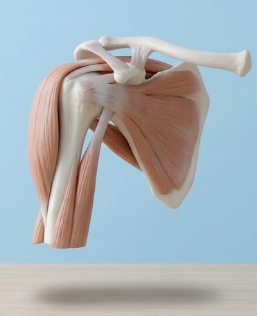
Reverse Shoulder Replacement Recovery Guide
Reverse shoulder replacement flips ball-and-socket orientation so the deltoid can power the arm when the rotator cuff is not functional. Early recovery protects the deltoid and often uses a sling or abduction pillow.
Prepared by Be Recovery Ready. Clinical content by Kyle Macri, DPT, FAAOMPT and Steve Lucci, PT (30+ years combined orthopedic experience).
Shoulder recovery · Full recovery guide
Reverse Shoulder Replacement Recovery Guide
Reverse shoulder replacement flips ball-and-socket orientation so the deltoid can power the arm when the rotator cuff is not functional. Early recovery protects the deltoid and often uses a sling or abduction pillow.
Prepared by Be Recovery Ready. Clinical content by Kyle Macri, DPT, FAAOMPT and Steve Lucci, PT (30+ years combined orthopedic experience).
Recovery timeline checklist
General milestones aligned with common hospital discharge education and orthopedic rehab phases. Your surgeon's written protocol always takes priority.
Before surgery
- Confirm reverse vs anatomic. Equipment and precautions differ.
- Fit the exact sling/abduction pillow you will go home in.
- Set up sleep support; many reverse patients sleep reclined longer.
- Plan clothing that fits over an abduction pillow if used.
Weeks 0–2
- Wear the immobilizer as ordered; hand/wrist pumps if allowed.
- No active lifting of the surgical arm; deltoid healing needs protection.
- Ice; watch axillary skin under pillows/slings for breakdown.
- Avoid pushing up from chairs with the surgical arm.
Weeks 2–6
- PT starts protected motion; do not self-stretch into forbidden zones.
- Sling weans on schedule, not when the arm “feels ready.”
- Driving and overhead reach wait for clearance.
- Desk work with protection may be possible; lifting waits.
Weeks 6–16+
- Deltoid-driven strength progresses under PT; overhead goals are individualized.
- Lifelong lifting limits may apply. Ask about job and sport restrictions.
- Report instability or night pain that regresses after gains.
- Long-term: posture and scapular mechanics support the reverse implant.
How home setup supports recovery
Everyday challenges — mobility, bathing, dressing, sleep, and more — often drive what you need at home. These categories group commonly recommended equipment around those functional needs.
Abduction pillow / sling system
Reverse TSA often needs more immobilization bulk than anatomic TSA. Fit matters.
Sleep support
Recliners reduce strain when you cannot lie flat or on the side.
Push-up prevention ADLs
Raised toilet seats and armed chairs help you stand without loading the surgical arm.
Commonly recommended items
Included in your kit
- Shoulder Abduction PillowHow-to guide
- Dressing Stick with Shoehorn
- Button Hook
- Zipper Pull
Frequently asked questions
Why reverse instead of anatomic?▾
Reverse is chosen when the rotator cuff cannot center the joint. Mechanics and early precautions differ from anatomic TSA.
What is a dislocation precaution for reverse TSA?▾
Surgeons often limit combinations like extension with internal rotation. Get your written list. Do not copy anatomic-TSA advice.
How long is the sling?▾
Frequently several weeks; abduction pillows may be used early. Only your protocol sets the wean date.
When can I reach into a cupboard?▾
Overhead reaching is delayed until motion milestones pass, often many weeks.
Is this guide a substitute for my surgeon’s orders?▾
No. This is patient education to help you plan equipment and home setup. Always follow your surgeon and physical therapist’s written protocol.
Why reverse instead of anatomic?
Reverse is chosen when the rotator cuff cannot center the joint. Mechanics and early precautions differ from anatomic TSA.
What is a dislocation precaution for reverse TSA?
Surgeons often limit combinations like extension with internal rotation. Get your written list. Do not copy anatomic-TSA advice.
How long is the sling?
Frequently several weeks; abduction pillows may be used early. Only your protocol sets the wean date.
When can I reach into a cupboard?
Overhead reaching is delayed until motion milestones pass, often many weeks.
Is this guide a substitute for my surgeon’s orders?
No. This is patient education to help you plan equipment and home setup. Always follow your surgeon and physical therapist’s written protocol.
Community
Talk with others recovering from Reverse Shoulder Replacement Recovery Guide
Ask what to expect, compare notes on week-by-week recovery, or share what helped you. Peer support only — not medical advice.
Join the conversation